The model exists. That does not mean the quantities are right.
Most project teams assume that if a BIM model exists, the quantities inside it are usable. In practice, that assumption creates more commercial risk than working from 2D drawings ever did. At least with drawings, everyone knew they were estimating.
With a BIM model, the numbers carry an authority they have not earned. Contractors price from them. Cost plans rely on them. Funders accept reports built on them. Nobody questions them until a variation claim arrives and the baseline falls apart.
The problem is not the model. The problem is treating it as a source of truth before anyone has checked whether it deserves that trust.
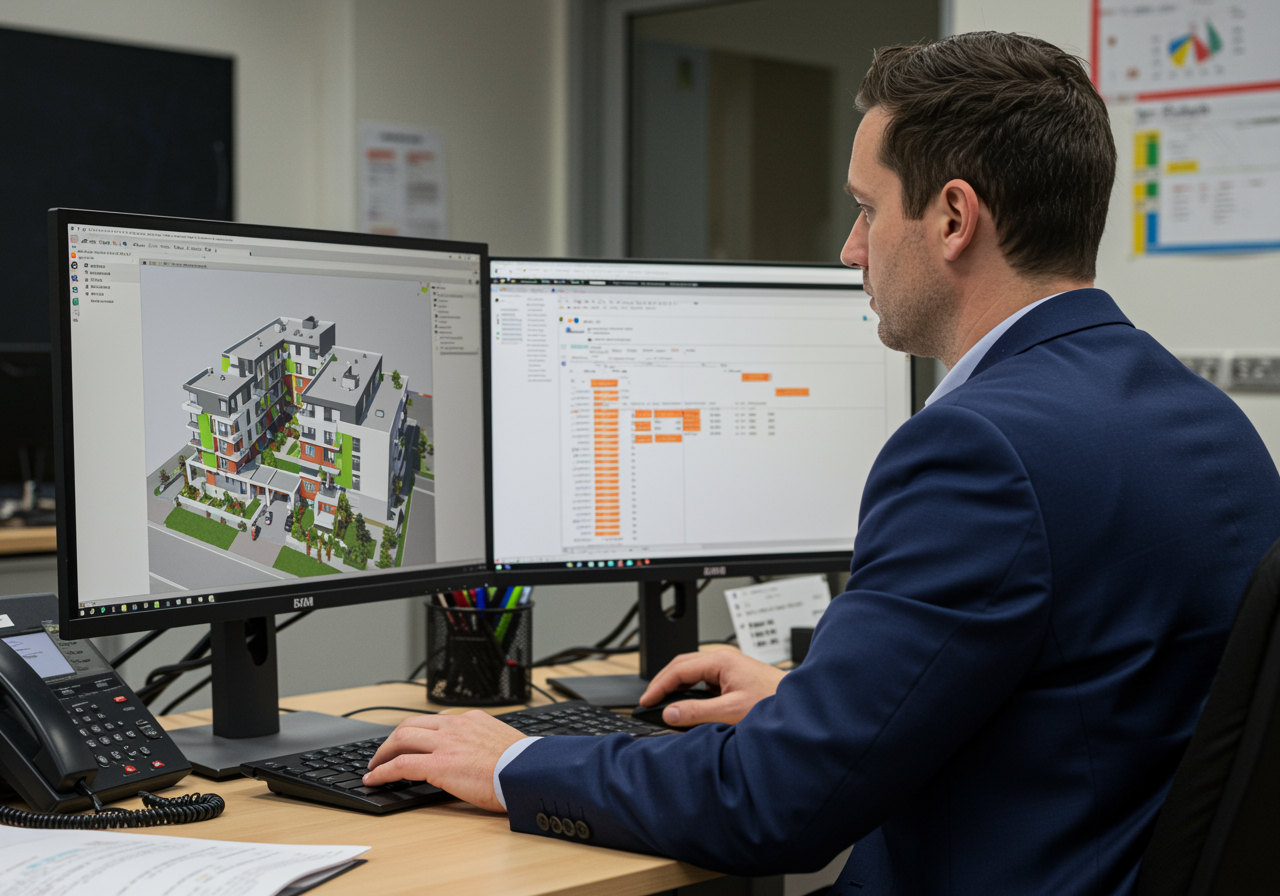
Why BIM models are built for design, not for measurement
A BIM model serves the design team first. Architects and engineers use it to coordinate geometry, resolve clashes and satisfy planning and building regulations requirements. Those are legitimate and important purposes. They are not the same as producing quantities that a quantity surveyor, a contractor or a funder can rely upon commercially.
The level of detail in a model at any given stage reflects what the design team needs, not what commercial management requires. Elements get modelled as generic objects. Finishes get represented as surfaces rather than specified materials. Temporary works, access constraints and phasing logic rarely appear at all.
When we audit a model for BIM Quantity Intelligence, we regularly find elements that are present in the model but absent from the specification, items that appear twice due to coordination between different design disciplines, and entire packages that the model does not represent because the designer used a 2D detail instead. These are not failures of the design team. They reflect the fact that a BIM model and a bill of quantities serve different purposes and require different standards of information.
The specific risks that unvalidated quantities create
Taking quantities directly from an unvalidated BIM model creates a chain of commercial problems that compounds at every stage of the project.
At tender stage, contractors price from quantities they did not produce and do not trust. They protect themselves with qualifications, assumptions and exclusions that shift risk back to the client in ways that are rarely visible until a dispute arises. This is one of the patterns we see most often in tender documentation gaps and scope definition risk.
During construction, unvalidated quantities mean there is no agreed baseline against which to assess change. Every variation becomes a negotiation from first principles. The contractor has their number. The client has a different number. Neither party can point to a shared source of truth, because one was never established.
At final account, the absence of a defensible quantity baseline is what turns a straightforward reconciliation into a protracted dispute. We see this directly in the projects we pick up at quantity assumption risk and variation claim exposure stage, often years into a programme that could have been closed out months earlier.

What independent validation actually involves
Validating a BIM model for commercial use is not a software check. It requires commercial judgement applied to technical information.
At Reltic, we start every BIM Quantity Intelligence engagement with a model audit. We review the model against the current drawing set and specification to identify where they agree and where they diverge. We assess the level of detail in each element against the measurement standard required for that work package. We flag missing scopes, duplicated items and elements that carry geometric data but no commercial meaning.
From that audit, we produce a clear position statement: which parts of the model we can measure from directly, which require supplementing from drawings or specifications, and where we need targeted allowances because the design is not yet complete enough to measure at all.
That position statement becomes the foundation for everything that follows, including Digital Cost Planning, Strategic Procurement and Construction Cost Control. It is also the document that protects the client when a contractor challenges the quantity basis at tender or during a variation negotiation.
Who carries the risk when quantities are wrong
When quantities taken from an unvalidated BIM model turn out to be wrong, the client carries the cost. The contractor has their qualifications. The designer has their professional scope limitations. The software vendor has no liability at all.
Independent quantity validation is one of the few interventions in construction that directly reduces client-side risk before it materialises. It costs a fraction of what a single disputed variation claim costs to resolve.
If you are carrying financial risk on a UK construction project and your quantities come from a model that nobody has independently validated, that is a commercial exposure worth addressing before tender, not after.

What to do next
If your project has a BIM model but no independent quantity validation, the commercial risk is already building. It surfaces at tender, on site and at final account, and it costs more to resolve at each stage.
You can read more about our BIM Quantity Intelligence service, or see how it connects with Digital Cost Planning, Strategic Procurement, Construction Cost Control and Final Account and Dispute Support.
If you would like us to review your current model and quantity position, get in touch with Reltic directly. We can assess what you have, identify where the gaps are, and agree a validation approach that matches your programme and risk profile.