When a contractor hands you their quantities, the risk is already priced in.
A contractor’s BIM take-off is not a neutral document. By the time it reaches the client or funder, a commercial team has reviewed every line. They have made decisions about what to include, what to qualify and what to leave out. Those decisions protect the contractor’s position. Without independent BIM take-off validation, nobody is protecting the client’s.
This is not about distrust. It is about the structural reality of construction contracts. The contractor and the client sit on opposite sides of the same commercial equation. Both need their own numbers.

What a contractor’s BIM take-off typically contains.
A contractor’s quantity take-off extracted from a BIM model reflects their pricing strategy as much as it reflects the model. It includes the items they want to price clearly and qualifies or excludes the items where they carry uncertainty.
In practice, we regularly find four types of problem when we review a contractor’s BIM take-off.
Scope gaps, where elements visible in the model do not appear in the take-off because the contractor has excluded them pending further design information. This transfers the cost of incomplete design directly to the client as a future variation.
Measurement differences, where the contractor has measured elements using a different method or rule than the design intent requires. The geometry may be correct but the commercial interpretation produces a different quantity, and therefore a different price.
Duplicated items, particularly on projects where multiple design disciplines have produced overlapping model elements. A contractor who prices both gets paid twice. A contractor who excludes both creates a gap that surfaces mid-contract.
Unpriced risk, where the contractor has included the quantity but attached a rate that does not reflect the actual complexity of installation, access or programme. This appears competitive at tender and generates acceleration and loss and expense claims on site. These are exactly the commercial patterns we document in contractor pricing volatility and tender documentation gaps.
How we approach BIM take-off validation.
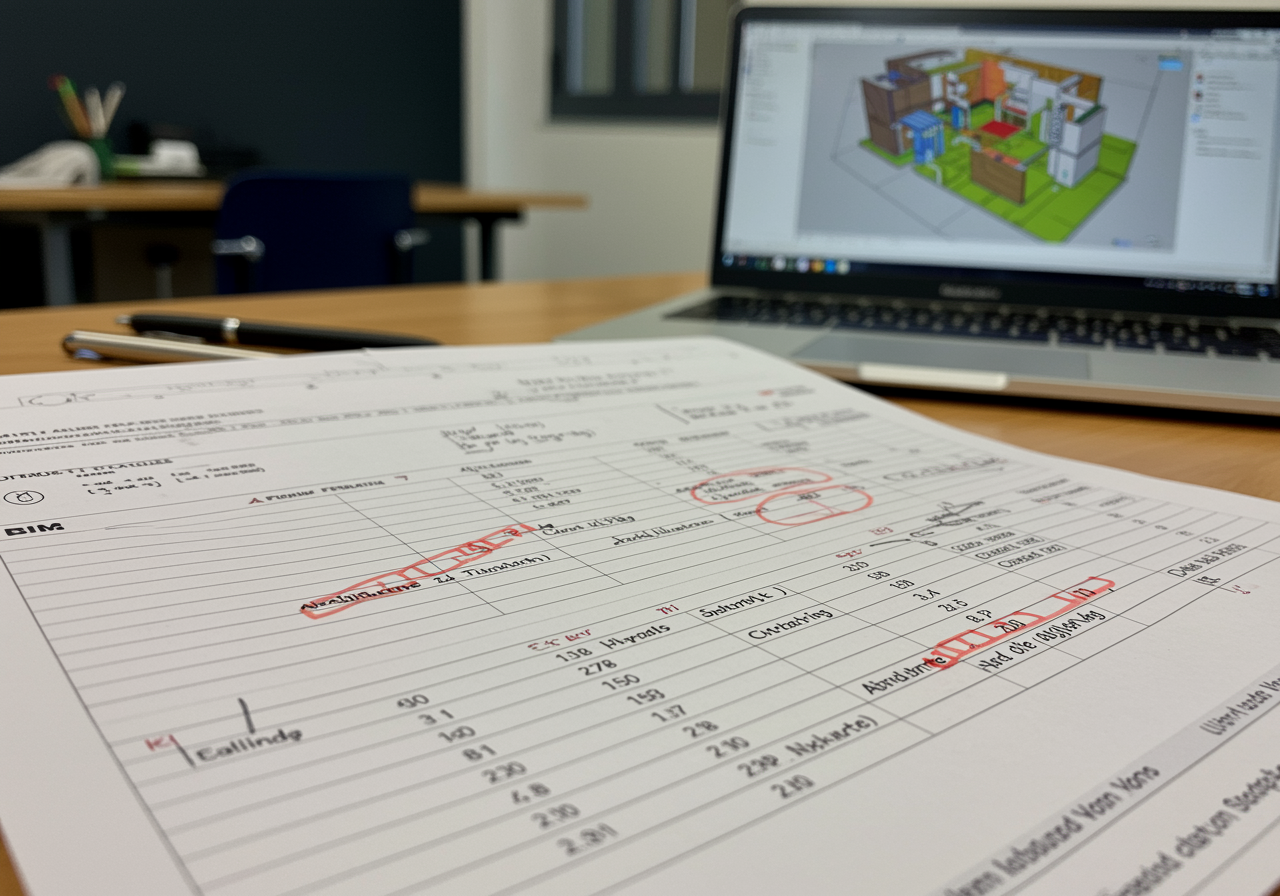
Independent BIM take-off validation at Reltic follows a structured process. We do not simply check arithmetic. We interrogate the commercial logic behind every significant line.
We start by obtaining the contractor’s take-off alongside the model, the current drawing set and the specification. We run our own independent measurement of the key packages from the model and compare the results line by line against the contractor’s figures.
Where differences arise, we categorise them. Measurement method differences are documented and a single agreed method is established for the project. Scope gaps are listed and a position is agreed on whether they fall within the contract or outside it, before the contract is signed rather than after work begins.
We then produce a validated quantity schedule that both parties can work from. This becomes the baseline for Construction Cost Control, Variation and Change Control and ultimately the Final Account and Dispute Support process. It is also the document that makes variation negotiations faster, because the starting point is agreed rather than contested.
The whole process connects directly to how we structure Strategic Procurement, because the packaging of work and the clarity of scope in tender documents determines how much validation work is required in the first place.
When to commission independent validation.
The most effective point to commission independent BIM take-off validation is before the contract is executed. At that stage, discrepancies can be resolved through negotiation rather than dispute. Scope gaps can be closed or priced. Measurement differences can be aligned. The contract sum reflects a position that both parties understand.
Validation after contract execution is still valuable, but the leverage is different. At that point, discrepancies become the basis for variation claims rather than pre-contract adjustments. The commercial cost is higher and the process takes longer.
On high-end residential projects and complex phasing schemes, where the programme is tight and the specification is detailed, pre-contract validation consistently reduces the volume of variations during construction. The investment at tender stage pays back many times over by final account.

Who this matters to.
If you are a developer or private investor about to execute a construction contract, independent BIM take-off validation gives you certainty that the quantity basis of your contract sum is sound. It closes the gaps that generate variations and protects your position if the final account becomes contentious.
If you are a funder or family office releasing capital against a construction programme, a validated quantity schedule gives you a reliable basis for monitoring drawdowns and assessing contractor applications.
If you are a main contractor confident in your own take-off, independent validation gives you a defensible position in front of the client and funder. It removes the suspicion that your quantities serve your commercial interest rather than the project’s.
In every case, the alternative is proceeding with a quantity basis that one party produced and the other party accepted without checking. On any project of scale or complexity, that is a risk that rarely stays hidden for long.
What to do next.
If you are approaching tender on a UK construction project and your contractor has produced a BIM take-off that nobody has independently reviewed, the time to act is now, not after the contract is signed.
You can read more about our BIM Quantity Intelligence service, or see how it connects with Digital Cost Planning, Strategic Procurement and Construction Cost Control.
If you would like us to review a specific take-off or quantity schedule, get in touch with Reltic directly. We can assess the document, identify the gaps and agree a validation scope that fits your programme.